Bible Study: Lent 1 (A) – February 22, 2026
[RCL]: Genesis 2:15-17, 3:1-7; Psalm 32; Romans 5:12-19; Matthew 4:1-11
Opening Prayer |
Almighty and everlasting God, you are always more ready to hear than we to pray, and to give more than we either desire or deserve: Pour upon us the abundance of your mercy, forgiving us those things of which our conscience is afraid, and giving us those good things for which we are not worthy to ask, except through the merits and mediation of Jesus Christ our Savior; who lives and reigns with you and the Holy Spirit, one God, for ever and ever. Amen.
Context |
Great heroes are plentiful in the Hebrew Bible—from Moses delivering the Israelites out of Egypt, to Esther interceding with the Persian King Ahasuerus (Xerxes) to save her people—but there is something unique about the biblical image of heroism. In the surrounding ancient near eastern cultures, figures like Gilgamesh or Hercules rallied against the gods for power and may even be or become semi-divine themselves. But biblical heroes, by contrast, rely on the steadfast mercy of God in the midst of their very human frailty.
While the author of Psalm 32 is unknown, scribal tradition has long associated this psalm with King David, one such biblical hero. There are many possible ways to read a psalm, but the traditional connection of this psalm with David invites the reader to use their spiritual imagination. What does it mean to be a hero who has fallen short?
King David, though beloved by God, was a human being with his own temptations and weaknesses. The Book of Samuel tells the story of a young man devoted to God, who defeats the giant, Goliath, and gains favor with King Saul, whereupon he becomes embroiled in political conflict. When David himself eventually becomes King, he spares little regard for the consequences of his actions on his people. He covets the wife of Uriah, one of his loyal soldiers, and takes her for himself. In an effort to hide his actions, he sends Uriah to his death in battle.
Though he eventually acknowledges his sin, David spends much of his life trying to understand the consequences of his choices. In this psalm, we can lament alongside David the ways we have fallen short, but so too can we give thanks for the forgiveness and mercy God offers us so freely. This psalm reflects King David’s story, as well as the universal human story. How does it reflect your story?
Theological Reflection |
Every journey needs a map, and Psalm 32 begins with the destination in sight. Happy are they whose transgressions are forgiven. The opening verses give away the ending with unreserved delight. God is going to forgive! The key to human happiness is forgiveness and an unburdened spirit.
Verses 3 and 4 describe the physical weight of keeping a secret from God. Earthy embodied
language expresses the psalmist’s anguish. My bones withered away. My moisture was dried up as in the heat of summer. The body feels the effects of fear, anxiety, and shame. The deepest parts of the body, the structures that sustain human form and the water that replenishes the whole, suffer with the burden of unspoken truths.
This struggle drives a disconnect between the body and mind, systems that were created to work together. This disconnect extends to the human relationship with God. Your hand was heavy upon me day and night. Touch that should feel comforting becomes overshadowed by fear and anguish. Human perception becomes distorted under the weight of withheld truths.
Though Lent is a season to lament and grieve the ways that humans draw away from God, remember, the ending has already been given away. The Psalmist does not dwell in misery for more than two verses. Rescue comes without drama or delay. Then you forgave me. The psalmist offers the truth to God and receives the gift of mercy. There is no mystification or confusion. From the very moment everything is laid out on the table, God’s forgiveness is granted. Truth-telling is the transformational moment on which everything hinges. For from this point forward, no times of trouble or overflowing waters can destroy the freedom found in God’s abundant love.
The wisdom of the psalm teaches that happiness, security, and freedom are not found in being perfect, or in fighting against all the things in life that are frightening or difficult. Everything that a human being most deeply needs can be found in complete intimacy with God. God wants to know everything about his beloved children, even the parts that hide in the shadows.
If all of that is true, then what are the faithful called to do next? All the faithful will make their prayers to you in time of trouble. This is the mark of faithfulness: trusting in God to hold every care, even in times of trouble. Faithfulness is living life in the knowledge that God responds with mercy—even to human failing—and trusting in that mercy enough to bring one’s whole self to God again and again.
In this newfound freedom, the psalmist is finally able to hear God’s teaching. I will instruct you and teach you in the way you should go. With all of the distortions out of the way, God can introduce what it really means to be human. To be fully human is to choose to stay near to God, to understand that what God wants for humans is goodness and delight.
This is one of the seven “Penitential Psalms” traditionally associated with the Lenten season, and it shines a light on the healing power of God’s mercy. Mercy embraces those who trust the Lord. There is such tenderness in these words. To stay near to God is to be embraced, to be lovingly held. That is a cause for joy. In the beginning of the Lenten season, Psalm 32 offers the opportunity for thanksgiving, to rejoice in the tender care God offers the soul.
Reflection Questions |
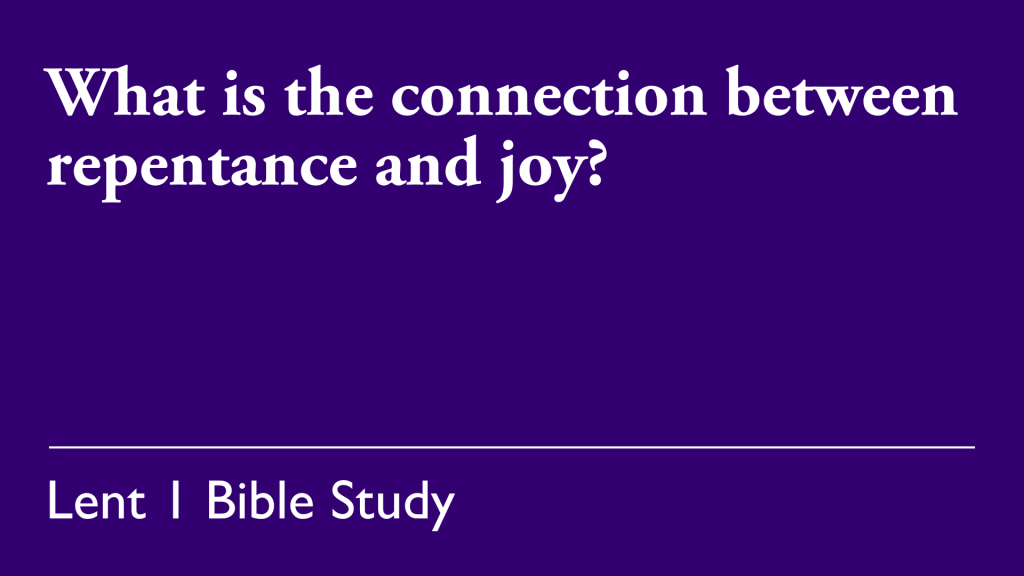
- What is the connection between repentance and joy?
- How is your Lenten practice or devotion drawing you closer to God’s mercy?
- Where in your life do you feel embraced by God?
- How and when do you practice trusting in God?
Faith in Practice |
This week, consider God’s gift of mercy. This gift is reaffirmed in worship through the confession and absolution, but the Sacrament of Reconciliation is available to anyone who wishes to engage more intentionally with this gift of forgiveness. Take an inventory this season and ask: is there any part of you that desires to be more free in God’s mercy? What would you tell God if there were no secrets between you? Allow your whole self to be lovingly embraced this season in the Sacrament of Reconciliation or in personal prayer.
Kelsey Aebi is a postulant for the priesthood in the Diocese of East Tennessee, and an M.Div. student at the School of Theology in Sewanee, TN. As a seminarian, Kelsey especially enjoys the study of the Hebrew Bible, and serving as a Sacristan in the Chapel of the Apostles. In her free time, she enjoys reading fantasy and science fiction, praying the rosary, and traveling with her spouse.