
This page is available in: Español
Bible Study: Proper 24 (C) – 2025
October 19, 2025
RCL: Jeremiah 31:27-34; Psalm 119:97-104; 2 Timothy 3:14-4:5; Luke 18:1-8
Jeremiah 31:27-34
Very few people want to be the one to insist that an old tradition, a former way of thinking, or beloved way of life must end. Even the iconoclasts among us know that pressing for transformation often comes at great personal cost. In fact, Jeremiah’s own autobiographical account (chapters 26-45) suggests that he wasn’t particularly beloved for his oracles of judgment and insistence on amendment of life.
And yet, amid the isolation, pain of exile, and loss that Jeremiah and his people were living through, it would have been hard to imagine any kind of better future without letting at least some things go. The references to the Sinai covenant (v. 32) and the teachings of Deuteronomic law (vv. 33-34) reminded the ancient people in exile and even us now that this is not a text about replacing one covenant with another, but rather God’s relentless willingness to make as many covenants as it takes until the people remain faithful. Though accountability and letting old idols go are required of us, God’s forgiveness for each new generation stands the test of time. And this is the promise of hope that Jeremiah reminds the battered and scattered people in the text. The days are surely coming when God will help us build and plant and start anew.
- How might letting go of a former thing and accepting forgiveness from God bring hope and transformation into your life today? How could this pattern bring hope and transformation into your congregation?
Psalm 119:97-104
Modern life does not easily lend itself to meditation on anything, much less meditation on the law of God. And the pursuit of personal happiness can be easily mistaken for the path of wisdom. Do we love and observe the commands of the news cycle and our social media feeds? How often do we settle for processed sugar when the Psalmist offers us the image of a dripping honeycomb made lovingly by bees who know the wisdom of steadily and diligently gathering the pollen needed for the fruit of their labor? This invitation to love God’s law reminds us that the law of God is more than a list of dos and don’ts; it is an invitation to a way of love.
- What do you find occupying your mind all day long?
- How do you receive the Psalmist’s invitation to God’s law?
2 Timothy 3:14-4:5
It is impossible to know exactly which texts are being referenced as scripture here. They most certainly included the Hebrew Scriptures and some of the earliest written texts that we think of as the New Testament. However, given when 2 Timothy was likely written, it is not possible that the writer would be referencing the exact iteration of what Christians now call the Bible. So, what do we make of this instruction on how to use scripture and the urgency with which the writer encourages the community to hold fast to sound doctrine?
The unity of the church has often been tested throughout history by this call to defend the truth of the gospel. Too often, we have interpreted this and passages like it to proof-text against those we disagree with in matters of faith. Or, we have been blind to how we have diluted the message of Jesus to make it appealing to our own desires. I suppose it depends on who you ask.
Considering the larger message of 2 Timothy, the admonishment here is for each of the baptized to persist in the gospel work given to them. Earlier in the text, it was stated plainly, “And the Lord’s servant must not be quarrelsome but kindly to everyone, an apt teacher, patient, correcting opponents with gentleness” (2:24-25a). We have been given a gospel ministry that is rooted in the traditions and scriptures we have received, and leaders have been given a special accountability to steward these well. Our task is to remain faithful in proclaiming salvation through faith in Christ and to treat others with the same love and gentleness that we have received. The rest is God’s work.
- Sometimes, controversies about the right interpretation of scripture and sound doctrine can be personally painful. What might faithfulness mean when this happens? How might those in lay and ordained leadership take pastoral responsibility and accountability in these circumstances?
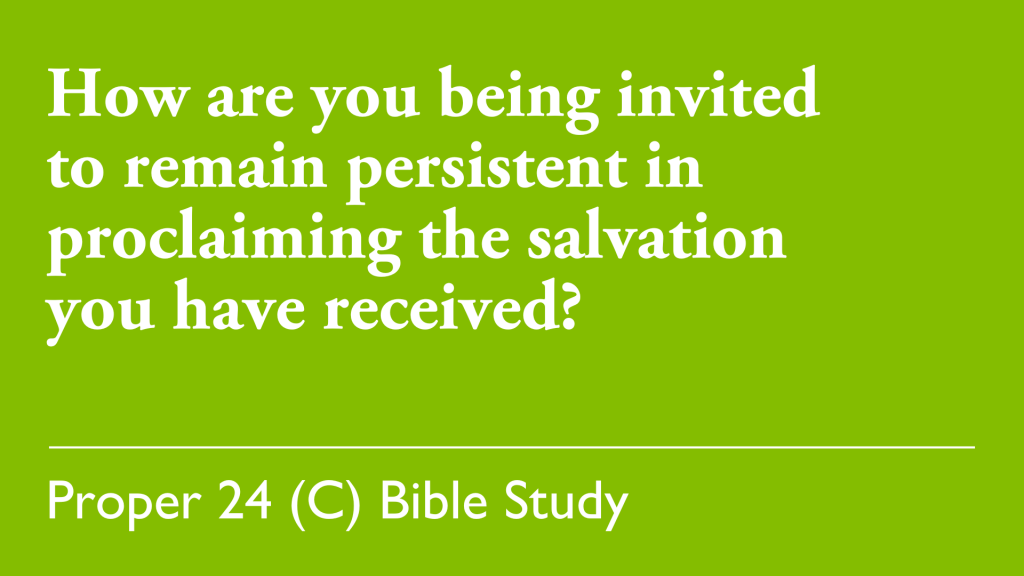
- How are you being invited to remain persistent in proclaiming the salvation you have received?
Luke 18:1-8
In an Episcopal confirmation class, you might learn, “lex orandi, lex credendi,” a Latin phrase translating to “the rule of prayer [is] the rule of belief,” or “how we pray is how we believe.” This idea is central to our practice of common worship, reminding us that our observance of the liturgies of the Book of Common Prayer shapes our beliefs. Prayers are theologically transformative. And so, it might be appropriate to ask what belief is being shaped through the persistent prayers of the widow in Jesus’ parable.
The parable is part of Jesus’ answer to a question about when God’s ultimate reign will come (Luke 17:20). Jesus resists and reframes the questions with riddles, irony, and parables. In stark contrast to the wicked judge, who must be forced into his duty by a defiant widow, Jesus says that God is just and nothing like this judge. He then interprets his own parable with a question. Instead of lecturing about when the end will come, Jesus admonishes them to remain persistent in prayer and wonders if they will continue to believe his proclamation recorded in Luke 4:18. Good news has come to the oppressed, and in this case, the widow. What rule of belief is shaped by this parable about prayer? In praying like the persistent widow, we see that prayer is about both our relationship with God and our relationships with one another. In prayer, we expand our ability to believe in God’s just work in the world and our role as partners in that work.
- In what ways has your participation in the prayers of the church shaped your own belief? How have those beliefs shaped your practice of prayer inside and outside the walls of the building?
- How does this parable affirm and/or challenge your own practice of prayer?
This page is available in: Español
Don’t forget to subscribe to the Sermons That Work podcast to hear this sermon and more on your favorite podcasting app! Recordings are released the Thursday before each liturgical date.
Receive Free Weekly Sermons That Work Resources!

This page is available in: Español