
Glossary of Terms
Second Song of Isaiah, The
See Quaerite Dominum.
Secularizing a Consecrated Building
This service is used to deconsecrate and secularize a consecrated building that is to be taken down or used for other purposes. The form for this service is provided by the BOS. The presiding minister may be the bishop or a deputy appointed by the bishop. The altar and all consecrated and dedicated objects that […]
Seder Meal
At this traditional Jewish Passover meal the story of the Exodus (haggadah) is read and ritual actions are performed. The seder today consists of fourteen elements: 1) Kiddush, the blessing of wine and the day, 2) Urehatz, washing of hands, 3) Karpas, eating green herbs, 4) Yachatz, breaking the middle matzo, 5) Maggid, the Passover […]
Sedilia
This triple seat in the sanctuary of a church is for the celebrant, deacon, and sub-deacon at solemn Mass. It is usually a bench with a back divided into thirds. In some stone churches the sedilia are incorporated into the north wall of the sanctuary. Today, the use of a single seat for the presider […]
See
The bishop's throne or chair. The term is from the Latin, “seat.” The episcopal throne is a symbol of the bishop's authority and jurisdiction. It is typically located in the cathedral of the diocese. By extension, the location of the cathedral or church with the bishop's throne is known as the bishop's see. For example, […]
Seedlings, Inc
A ministry providing Christian Education materials. It has a special concern to address the needs of very small churches. The Rev. Betty Works Fuller began publishing a Sunday School curriculum in 1977 for St. James Church, La Grange, Texas. Other churches joined her in the effort. By 1979 the material, now called Seedlings, was being […]
Selwyn, George Augustus
(Apr. 5, 1809-Apr. 11, 1878). First Church of England Bishop of New Zealand. He was born in Hempstead, London, England. Selwyn was educated at Eton and St. John's College, Cambridge. He was ordained priest in 1833. After parish work at Windsor and tutoring at Eton, he was consecrated the first Church of England Bishop in […]
Seminarian
A seminary student. See Seminary.
Seminary
Theological school for training ordained and lay leaders of the church. Those seeking to be ordained typically participate in a three-year course of studies leading to the Master of Divinity degree. First-year students are called “juniors,” second-year students are called “middlers,” and third-year students are called “seniors.” In addition to providing theological instruction and assisting […]
Senior Warden
See Wardens of a Parish.
Sentences (Opening)
Sentences of scripture that may be used at the beginning of Morning and Evening Prayer. These sentences may relate the office to the season, day, or time of worship. The opening sentences may also recall a general theme of Christian worship, and draw the congregation together for prayer as the office begins. The BCP service […]
Sentences of Administration
Words said by the ministers of the eucharist at the distribution of the consecrated bread and wine during the communion of the people.
Septuagesima Sunday
See Pre-Lenten Season.
Septuagint
Name given to the Greek version of the OT. The word “Septuagint,” meaning seventy, comes from the early legend that seventy-two (rounded down to seventy) Jewish scholars translated the Pentateuch into Greek during the reign of Ptolemy II Philadelphus (282-246 B.C.) in Alexandria, Egypt. This translation of the Hebrew Bible is often designated by the […]
Sequence
A hymn sung after the second lesson and before the gospel acclamation at the eucharist. Many sequences were composed in the middle ages, but the Council of Trent (1545-1563) sought to streamline the liturgy and reduced the number of sequences to those for Easter, Pentecost, Corpus Christi, and the Mass for the Dead. The sequence […]
Seraph (s), Seraphim (pl)
Supernatural creatures which have six wings and stand in attendance above the throne of the Lord, according to the vision of Isaiah (6:2-7). In this vision, a seraph said “Holy, holy, holy is the Lord of Hosts; the whole earth is full of his glory.” A seraph flew to Isaiah and touched his mouth with […]
Sergius I
(d. 701). Pope from 687. He was Syrian and spoke Greek. Sergius brought several liturgical innovations to the Roman Church. He introduced the Agnus Dei (“O Lamb of God, that takest away the sins of the world, have mercy upon us”; see BCP, p. 337) to the fraction (breaking of the bread) in the Roman […]
Sergius of Radonezh
(1314-1392). Abbot, mystic, and a patron saint of Russia. Sergius is considered the most popular Russian saint. In 1334 Sergius and his brother went to the forests near Radonezh, north of Moscow, to live in monastic solitude. They were joined by others. A chapel in honor of the Trinity was built in 1334. A community […]
Sermon
Religious address in a worship service. The sermon is to “break open” the Word of God and proclaim the gospel in the context of the readings from scripture, the liturgical occasion, the congregation gathered, and the pastoral needs of the situation. The Christian story, the congregation's story, and the preacher's story can be the one […]
Sermon on the Mount
A collection of the teachings of Jesus in the Gospel of Matthew (Chapters 5-7). It is the first of five special speeches in Matthew and takes place at the beginning of Jesus' ministry. Many of the sayings in the Sermon on the Mount are also found in the Gospel of Luke. Scholars agree that this […]
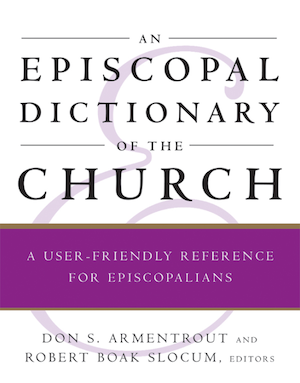
Glossary definitions provided courtesy of Church Publishing Incorporated, New York, NY,(All Rights reserved) from “An Episcopal Dictionary of the Church, A User Friendly Reference for Episcopalians,” Don S. Armentrout and Robert Boak Slocum, editors.