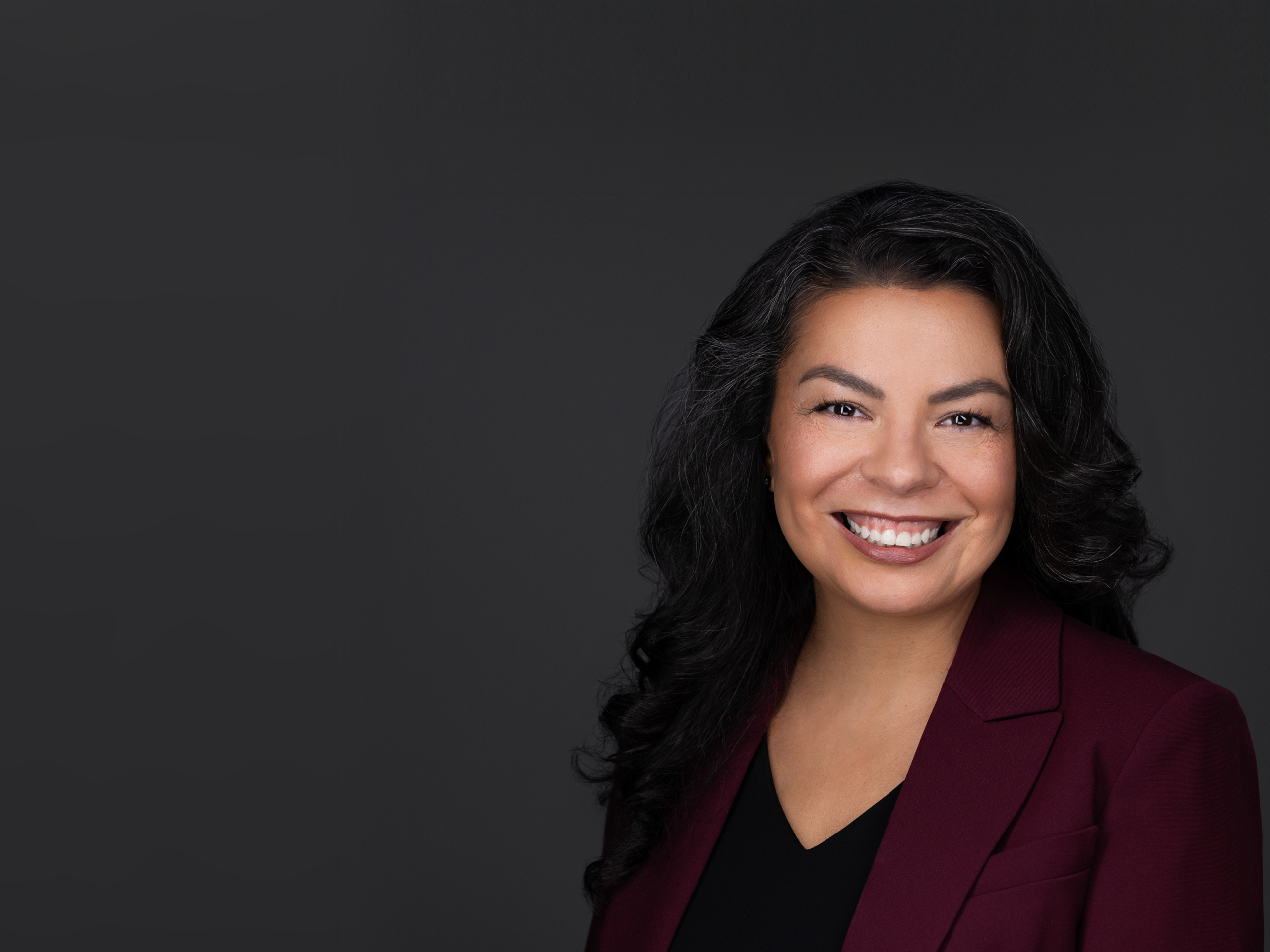
Following are opening remarks, as prepared for delivery, by House of Deputies President Julia Ayala Harris to the Executive Council of The Episcopal Church, which met at The Episcopal Church Center in New York City on Oct. 19, 2026.
The church was never promised permanence; it was promised the presence of God.
Good morning, Executive Council.
We gather today in a building that has served as the headquarters of The Episcopal Church for more than 60 years. Generations of Episcopalians have prayed, debated, disagreed, reconciled, and made decisions that have shaped our common life. But the church’s life did not begin at this address. For nearly 175 years before we came here, The Episcopal Church was already worshipping, serving, and discerning where God was calling it next.
And now we are considering whether it is time to leave.
That decision raises practical questions about property, finances, and the stewardship of our resources. But it also raises questions about the purpose of this church we serve:
- What are we called to sustain?
- And what are we called to release?
In the seventh chapter of Second Samuel, King David looks around at his beautiful house of cedar and realizes that the Ark of God is still dwelling in a tent.
David wants to build something permanent. Something worthy of God’s presence.
But God reminds David that the divine presence has traveled with the people all along. God had been present in their journeys, in their uncertainty, and in their becoming.
God had never required the house of cedar.
We may sell this building. We may move into temporary space while we discern what comes next. Our faithfulness will be measured not by whether we’ve preserved a certain address, but by whether our decisions have enabled the church to serve God’s mission.
And that question, Executive Council, goes well beyond the matter of this building.
As leaders, the way we discern and govern is one way we make our faith visible. It reveals what we value, whose voices we hear, and how we exercise the authority that’s been entrusted to us.
That responsibility matters especially in the world we live in today.
War. Displacement. Political violence. Families torn apart. Communities living in fear.
We are watching human suffering become so ordinary that we risk losing our capacity to be horrified by it.
As I speak with Episcopalians across our church, I hear deep concern and weariness over the ways in which Christianity has been invoked to justify cruelty, exclusion, and domination.
White Christian nationalism distorts the Gospel when it uses the name of Jesus Christ to defend racial hierarchy, sanctify authoritarianism, or deny the equal dignity of God’s children.
Our church must be willing to say so. Through our own decisions, our public and private actions, and through clear and courageous witness.
It means more than just issuing statements. It means examining and modeling how we use our resources, how we structure our institutions, and how we include the voices of people in the decisions that affect them.
These realities are not distant from the life of our church. They are reaching directly into the governance of our church.
As we prepare for the 82nd General Convention in Phoenix, we must confront an uncomfortable reality.
Some of our deputies are unable to enter the United States because of visa restrictions and immigration policies. Others fear encountering Immigration and Customs Enforcement on their way to Phoenix or while they are gathered with us. These are deputies elected by their dioceses to govern our church. They should be preparing to take their seats, not wondering whether they can safely get there.
When a deputy cannot participate, we lose their voice. We lose the experience of their community, the perspective of a diocese, and the contribution that person was elected to bring to our common discernment. Our decisions reflect who is present, and we are diminished when members of our body are missing.
In the litigation brought against the Department of Homeland Security by The Episcopal Church and other faith communities, we have described what happens when the threat of immigration enforcement reaches into our sacred spaces.
It keeps people from gathering in worship. It prevents access to ministries that provide food and care.
We cannot proclaim that we are one body in Christ while treating the exclusion of members of that body as a logistical inconvenience.
That is why we are planning opportunities to gather with deputies internationally and considering changes to our rules and processes that might allow for meaningful participation for deputies unable to travel to Phoenix.
We cannot promise that every solution will be possible. But we have a responsibility to explore what is possible before accepting exclusion as inevitable.
We cannot advocate for the dignity of our neighbors while leaving unexamined the barriers within our own institutions.
Which brings us back to this room. To 815 Second Avenue. To the decisions before Executive Council today.
We have an opportunity to release a building that may no longer serve us as it once did; to steward the resources entrusted to us; and to discern together what comes next.
That isn’t abandoning our history; it’s taking responsibility for our future.
Recently, while gathering with family, I came across some of my grandmother’s belongings. Among them were small devotional medallions about praying for one’s children.
My grandmother raised me.
She was a woman of deep faith who raised nine children of her own, then raised me as her tenth. She loved her dozens and dozens of grandchildren.
And she prayed for us. Constantly.
I brought some of those medallions home with me, and I’ve begun using them in my own times of prayer.
At first, I thought about my own children.
About my daughter, now a young adult, who has recently stepped into new leadership in the church.
About the world she is inheriting.
As I continued to pray, I found myself thinking beyond my own family.
About children growing up amid war and displacement. Children whose families live in fear of separation. Children who will inherit the consequences of decisions made today by people they will never meet.
My grandmother prayed for children whose futures she could not control. She loved them into a world she could not fully anticipate.
She trusted that her faith, her love, and her prayers might help sustain them through whatever came next.
And I wonder whether that’s what God’s asking of us.
To love this church enough to make decisions, the fruits of which we may never see. To defend the dignity of people we may never meet. To build a church capable of serving generations whose names we may never know.
They may not remember the motions we adopted, the budgets we debated, or the buildings in which we gathered.
But I pray they will inherit a church that was courageous when courage was required. A church that told the truth when silence would have been easier. A church that made room at the table rather than finding reasons to exclude.
This morning we began with David, standing in his house of cedar, wondering whether God needed something more permanent. God’s presence had never depended on a building.
We may be preparing to leave this place. But what will we carry forward? The people, our promises, the Gospel that brought us here in the first place.
We cannot control every force at work in the world around us. But we can decide what kind of church we will be in the midst of them. The God who traveled with the people in the wilderness is with us still—and calls us forward.
The church was never promised permanence; it was promised the presence of God.
May that promise give us the courage to govern faithfully, to speak truthfully, and to make decisions worthy of the Gospel we proclaim.
Thank you.