Bible Study: Lent 3 (A) – March 8, 2026
March 08, 2026
RCL: Exodus 17:1-7, Psalm 95, Romans 5:1-11; John 4:5-42
Opening Prayer |
Almighty God, you know that we have no power in ourselves to help ourselves: Keep us both outwardly in our bodies and inwardly in our souls, that we may be defended from all adversities which may happen to the body, and from all evil thoughts which may assault and hurt the soul; through Jesus Christ our Lord, who lives and reigns with you and the Holy Spirit, one God, forever and ever. Amen.
Context |
In Hebrew tradition, the title of the book of Psalms is Tehillim, a term related to hallelu-yah, meaning “Praise the Lord!” While many psalms are hymns of praise, there are many other varieties of tunes—and tones— included within the book. Produced out of the lived experience of the Israelite people, these songs reflect all of life: joy, apprehension, grief, rage, desolation, and hope. Because they contain both personal meditations and prayers alongside collective worship and lament, they truly can be thought of as songs in the key of life.
The book of Psalms is often divided into five parts, thought to parallel the five books of the Torah (Genesis, Exodus, Leviticus, Deuteronomy, and Numbers). Embedded in their very structure is the idea that they are songs of conversation, in conversation with one another, even though the content is often quite different.
Within Psalm 95, we see this inter-textual dialogue playing out in the way the author connects a hymn of communal worship to events recorded in the book of Numbers, when the Israelite people are wandering in the wilderness. Praise is interconnected with the history of rescue and salvation. This conversation between song/poetry and historical narrative reminds us that remembering is also a part of worship, a way of reflecting on who God is and what the collective past means to be God’s people.
Although the exact date of its composition is uncertain, Psalm 95’s mention of the events at Meribah and Massah suggest that it may have been written during the reforms which took place under King Josiah, or during the post-exilic period. In both of these named instances, the Israelites were wrestling with their own identity as God’s people, as well as with what faithfulness looked like in the midst of uncertainty and change.
Theological Reflection |
The opening of the psalm carries much the same tone as The Great Thanksgiving in our Eucharistic Prayer. There, we hear the officiant proclaim, “Lift up your hearts” and we respond, “We lift them up to the Lord.” In a similar vein, here, the psalmist proclaims to their community, “Come, let us sing to the Lord!” and the community answers, “Let us shout for joy to the Rock of our salvation.”
This pattern of call and response continues throughout the first half of the psalm. We might almost hear the voices intertwining together in our minds because we retain this rhythm of communal praise and thanksgiving in our own worship today.
However, this psalm then takes an unexpected twist that our liturgies usually do not: the psalmist brings up a very unpleasant memory and concludes with a warning. (It’s not exactly a happy note to end on!)
And yet even in this, there is purpose and meaning for us to capture. Verses 8-11 reference a painful moment from the past: a time when the Israelites struggled to trust what God was doing and responded to God with anger and despair. We read about this time in the Old Testament lesson appointed for today.
During their journey in the wilderness, the Israelites set up camp in a region without water. Immediately, they turn to Moses demanding, “Why did you bring us out of Egypt, to kill us and our children and livestock with thirst?” (Ex. 17:3). Distraught, Moses cries out to God. God promises Moses that if he strikes a rock with the staff Moses used at the parting of the Red Sea, water will flow from the rock. A beautiful promise follows: “I will be standing there in front of you on the rock at Horeb” (Ex. 17:6).
God promises to be present, right there in the wilderness, just as God has been present with them all along. We are told Moses names the place Meribah (meaning “test”) and Massah (meaning “quarrel”), because “the Israelites quarreled and tested the Lord, saying, ‘Is the Lord among us or not?’”
It’s an honest question—perhaps one we find ourselves asking in various ways. Is God with me or not?
But the wilderness is a very liminal space. It’s a place where we are invited to trust God’s faithfulness, even in the midst of uncertainty and risk. God accompanied the Israelites every step along their journey out of Egypt, yet the precarity of their situation clouded their ability to see and sense God’s presence.
The psalmist evokes this memory as a part of a moment of collective worship: recalling and recounting a time when God revealed God’s presence amidst precarity and doubt. This, in turn, calls the worshiping community to listen again for God’s voice in the midst of uncertainty and risk. The psalm invites its hearers to be open to the possibility that the answer to the question, “Is the Lord among us or not?” might be that God is standing there in front of them.
All we need is the grace to look and see. If we have open eyes and open hearts, we might discover the divine presence in even the most unlikely of places.
Reflection Questions |
- How does worship evoke memory in your own life?
- Where do you experience the creativity and tenderness of God? Where do you go to be reminded of God’s presence and care?
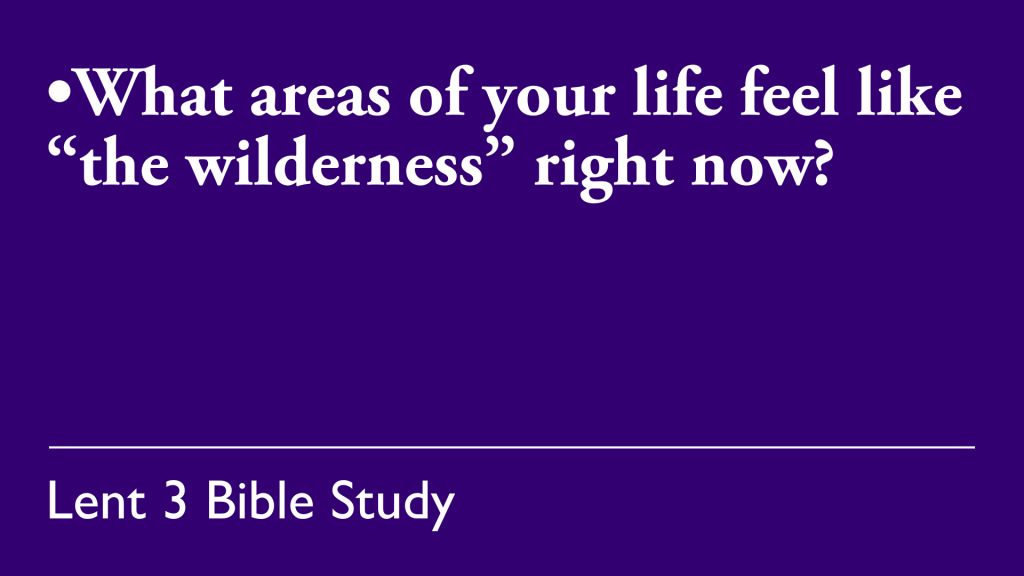
- What areas of your life feel like “the wilderness” right now?
- What makes it difficult for you to hear God’s voice or see God’s presence?
Faith in Practice |
In the last half of the psalm, the psalmist evokes a wilderness story from Israel’s past as a reminder to remain receptive to God’s voice in the present. Take some time this week to write down or reflect on a past experience which felt risky, painful, or like a complete failure while it unfolded, but in which you can now see the creativity and tenderness of God. Consider how that memory might invite you to hold space for God’s work in your life in the present moment. Be curious about how and where God’s voice might be calling to you, from within “the wilderness” of current challenges, conflict, or uncertainty.
Katelyn Printz is a Postulant from the Diocese of East Tennessee, currently in her second year at Virginia Theological Seminary in Alexandria, VA. Prior to being in seminary, Katelyn worked as a Kindergarten teacher at a play-based Episcopal school in Kingsport, TN and at the local yoga studio. As a part of her studies, she is working at Saint Columba’s Episcopal Church in DC, and loves being involved with children’s ministry and weekly worship services there. In her free time, she loves hot yoga, reading novels, and hiking with her husband Ben and their dogs Max and Athena.
Don’t forget to subscribe to the Sermons That Work podcast to hear this sermon and more on your favorite podcasting app! Recordings are released the Thursday before each liturgical date.
Receive Free Weekly Sermons That Work Resources!