Immigration Action Toolkit
The following is offered for informational purposes only and should not be considered legal advice. This area of the law is very complicated and fact-specific, and we urge you to consult local counsel for particular legal help. The resources below are from many organizations that are active in protecting migrants’ rights from multiple perspectives.
What to Know
Since 2025, the Trump Administration has made sweeping policy changes on immigration that impact millions of people. Many of these new policies have been—and will continue to be—challenged by the courts, and we anticipate continued shifts. In our support of migrants, and those living in our communities who face uncertain futures, obtaining and sharing accurate information is critical.
- Letter from Presiding Bishop Sean Rowe on Episcopal Migration Ministries (May 12, 2025)
- Follow the latest on Trump administration immigration policies
- Episcopal Church joins religious freedom lawsuit challenging ICE enforcement actions in churches (Feb. 11, 2025)
Ways to Help
- Stay informed
- Participate in weekly immigration and advocacy calls
- Subscribe to receive weekly updates from the Episcopal Church Office of Public Affairs
- Be prepared
- “Know Your Rights” training can help clergy, undocumented people, and allies know how to handle a possible encounter with federal, state, or local law enforcement
- Advocate to elected officials
- Contact your government representatives through these action alerts
- Episcopal Church One-pager on Immigration and Refugees
- Support Episcopal Migration Ministries
- Read more about EMM’s current work
- Make a gift to EMM
- Join the Episcopal Migration Response Network
Resources for Dioceses, Churches, and Individuals
- Family, church, and individual preparedness
- Step-by-Step Family Preparedness Plan (Immigrant Legal Resource Center)
- Sample power of attorney letter, English and español (National Latino Evangelical Coalition)
- Immigrant Registration primer, April 11, 2025 (U.S. Conference of Catholic Bishops) (en español)
- What Can Congregations Do to Prepare for Immigration Raids? (Evangelical Lutheran Church in America)
- How to prepare for immigration proceedings (USAHello) (en español)
- Legal Guide for Congregations Serving as Sanctuaries for Immigrants (Interfaith Center of New York)
- People on the Move: A Resource Equipping Churches to Welcome and Support Migrants, Refugees and Internally Displaced People (Anglican Alliance) (en español)
- Know your rights
- Know Your Rights: Five Things Parents Detained by ICE Should Know (The Center for Law and Social Policy) (en español)
- Know Your Rights (Catholic Legal Immigration Network, Inc.)
- Know Your Rights (Informed Immigrant) (en español)
- Know Your Rights card, in English and español (National Latino Evangelical Coalition)
- Know Your Rights for Immigrant Students & Schools (American Federation of Teachers) (en español)
- Manual for Pastors & Church Leaders in Response to Executive Orders on Immigration (National Latino Evangelical Coalition) (en español)
- Protected areas factsheet (National Immigration Law Center)
- Protecting our Students & Families Toolkit (American Federation of Teachers) (en español)
- 15 Things Educators & School Support Staff Can Do to Support Immigrant Youth & Families (American Federation of Teachers) (en español)
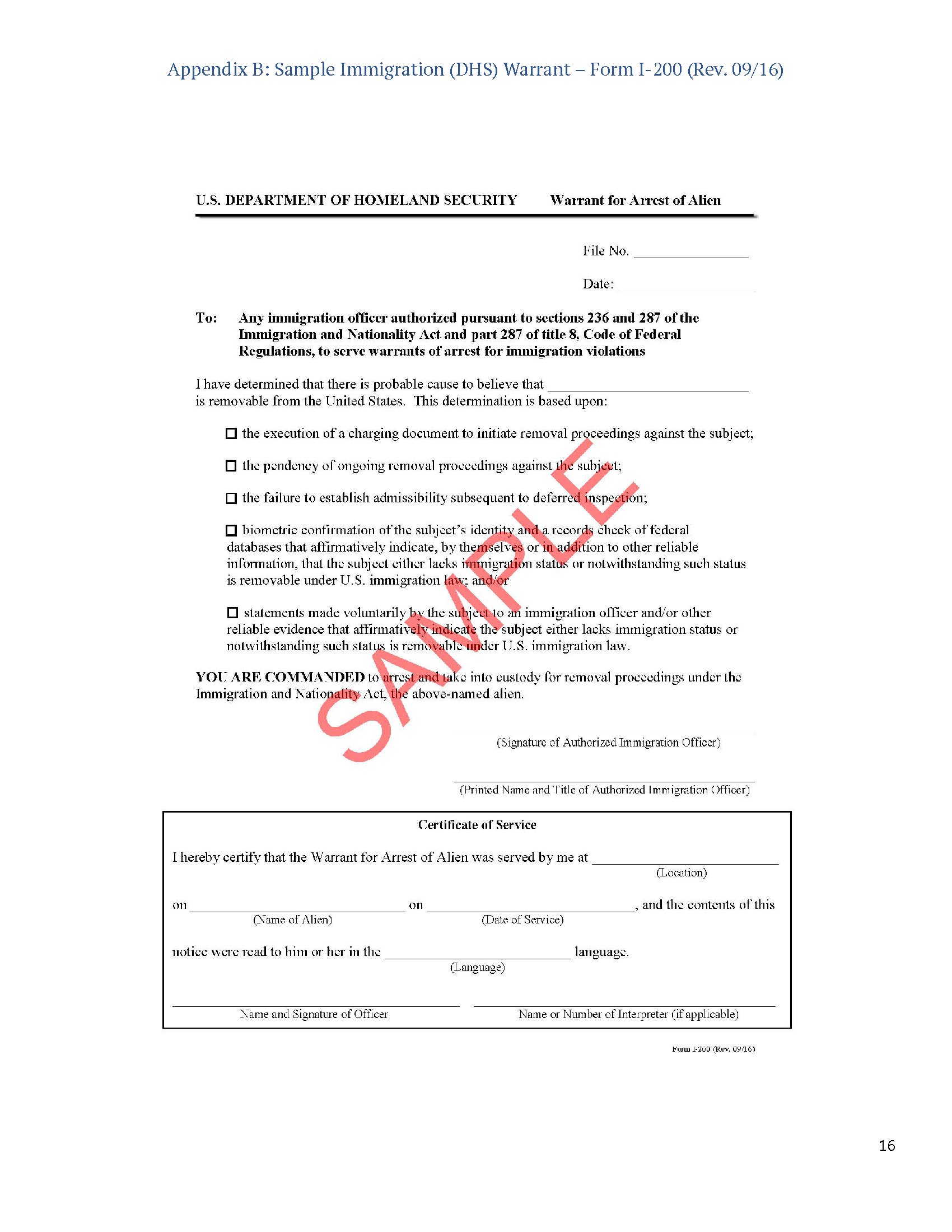
- Sample administrative (ICE) warrant (National Immigration Law Center – see full document)
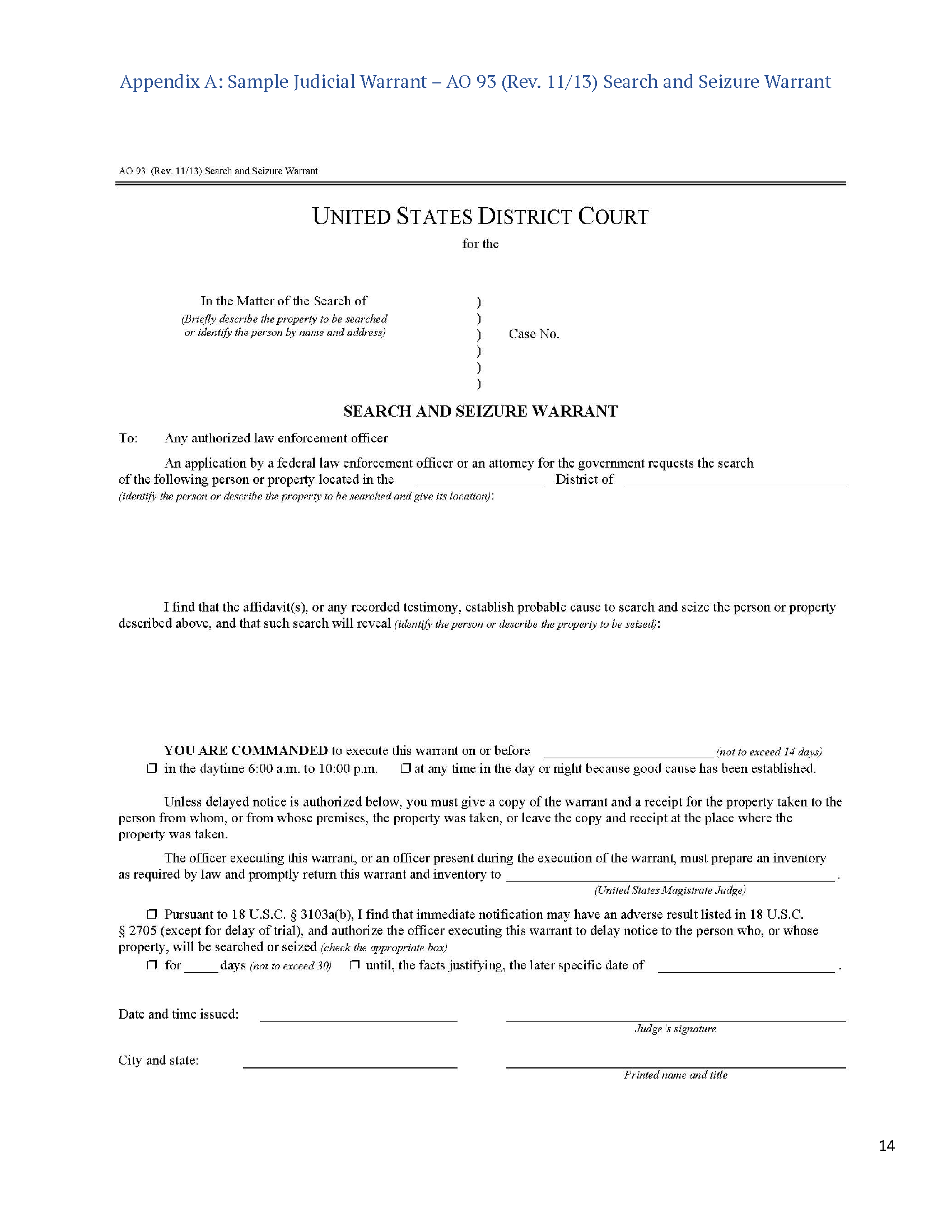
- Sample judicial warrant (National Immigration Law Center – see full document)
- Know Your Rights: Enforcement at the Airport (American Civil Liberties Union) (en español)
- Know Your Rights: What to Do if Arrested or Detained by Immigration (National Immigration Law Center) (en español)
- Rights & Risks for Green Card Holders (National Immigration Law Center) (en español)
- An Explainer on CBP Home (National Immigration Law Center)(en español)
Immigration Court Accompaniment Volunteer Programs
- New York City:
- New Sanctuary Coalition: Weekly trainings at Brooklyn Meeting of the Religious Society of Friends (Quakers), 110 Schemerhorn St., Brooklyn, New York. Visits courts in groups several mornings per week, meeting in advance at a designated spot.
- Sacred Court Support: In-person training on Sept. 15 (2025). This is a “high-touch” program that identifies people in advance and follows them throughout their process.
- Immigration ARC (Advocates Response Collaborative): Friend of the Court program
- California:
- North Bay Rapid Response Network: This network, which covers Napa, Solano, and Sonoma counties in the San Francisco Bay Area, offers training to be a legal observer and accompany people at risk to court hearings in Santa Rosa, as well as immigration court hearings and ICE check-ins in San Francisco. Become a Rapid Response Legal Observer | NBOP
- Faith In Action Bay Area: This network has a rapid response program to witness and document ICE activity and get appropriate legal counsel involved.
- Illinois:
Additional Resources by Topic
- Asylum and other temporary status
- Resources for asylum seekers (Asylum Seeker Advocacy Project) (en español)
- Temporary Protected Status (TPS) Fact Sheet (National Immigration Forum) (en español)
- Deferred Action for Childhood Arrival (DACA) and Dreamers
- Fact Sheet: Deferred Action for Childhood Arrivals (DACA) (National Immigration Forum) (en español)
- Fact Sheet: Deferred Action for Childhood Arrivals (DACA) (National Immigration Forum) (en español)
- Immigration Enforcement, Detention, and Deportation
- How to Find a Loved One After a U.S. Immigration Arrest (National Immigration Law Center) (en español)
- Expedited Removal Toolkit (Immigrant Legal Resource Center)
- Impact of Reconciliation Law
- New Funding Increases Immigration Enforcement – Explains how new federal money for enforcement will be spent (National Immigration Law Center) (en español)
- New Law Changes Taxes for Immigrants – Explains changes in the tax code impacting immigrants (National Immigration Law Center) (en español)
- New Law Limits Health Care & Food Aid for Immigrants – Explains immigrants’ public benefit eligibility changes (National Immigration Law Center) (en español)
- Indigenous people
- Resources for Individuals and Nonprofits Approached by ICE (Native American Rights Fund)
- Know Your Rights: Native Americans and Immigration Enforcement (ACLU Nebraska)
- Organizations focused on immigration
- Refugees
- Refugee Council USA
- A Guide for Community and Business Leaders Advocating for Refugees (Refugee Advocacy Lab)
- Religious workers
- Additional Spanish resources
- Recursos en español (National Immigration Forum)
Episcopal Church immigration policies
The Episcopal Church has a long history of welcoming and advocating for migrants, asylum seekers, and refugees through its Episcopal Migration Ministries and Office of Government Relations.
- Letter from Episcopal Church leaders on Trump administration immigration executive orders—Jan. 21, 2025