
Glossary of Terms
Mass
A term for the Holy Eucharist. It is primarily used by Anglicans, Roman Catholics, and Lutherans. It appeared as a part of the title of the service in the first BCP of 1549. It is included by the Catechism in a list of names by which the eucharist is known (BCP, p. 859). It is […]
Mass of the Pre-Sanctified
See Pre-Sanctified, Mass of the.
Massachusetts, Diocese of
The Diocese of Massachusetts was organized at Boston on Sept. 8, 1784. The 1901 General Convention voted to divide the diocese and established the Diocese of Western Massachusetts. The Diocese of Massachusetts consists of the following counties: Barnstable, Bristol, Dukes, Essex, Middlesex, Nantucket, Norfolk, Plymouth, and Suffolk, and the township of Southborough in Worcester County. […]
Master (or Mistress) of Novices
See Novice Guardian or Novice Master or Novice Mistress.
Master of Ceremonies, or M.C.
The person present in the liturgy to direct the movements of the various ministers and people involved and to coordinate a sustained ceremonial style throughout. A master of ceremonies, when designated, also takes responsibility for any rehearsals of the liturgy. The term “minister of ceremonies” (not gender-specific or hierarchical in its connotations) may be used […]
Matins
An early morning worship service, the first of the canonical hours. The name comes from the Latin matutinus “pertaining to the morning.” It is one of the canonical hours, which developed as special times or hours for prayer and devotion. Matins, sometimes spelled “mattins,” was the longest of the services of the breviary. It consisted […]
Matter (Sacramental)
The material or gesture constituting the outward and visible sign of a sacrament. A valid sacrament also requires the appropriate form, minister, and intent. In this sacramental context, form refers to the words of prayer that express the meaning of the sacrament and the matter used in the sacrament. In baptism, the matter is water; […]
Matthew, Apostle and Evangelist
According to Mark, he was the son of Alphaeus. He was a Jewish tax collector working for the Roman government at Capernaum. Matthew is called Levi in the accounts of his call to discipleship in Mark and Luke, but he is always referred to as Matthew in the lists of the apostles. It is possible […]
Matthew’s Bible
English Bible issued in 1537. It was based on the work of William Tyndale, Miles Coverdale's Old Testament, and the work of Conrad Pellican. It was edited by John Rogers (c. 1500-1555), who used the alias “Thomas Matthew.” This Bible was printed at Antwerp. It was dedicated to Henry VIII, and licensed by him for […]
Matthews, Sister Eva Mary
Matthews, Sister Eva Mary (Feb. 9, 1862-July 6, 1928). Founder of the Community of the Transfiguration. She was born in Oakencroft, near Glendale, Ohio, and raised a Presbyterian. Matthews studied at Wellesley College in 1880-1881. She decided to follow her clergyman brother Paul into the Episcopal Church during a visit to Oxford University in 1890. […]
Matthias the Apostle, Saint
Nothing is known about the life of Matthias except the one mention of him in the Book of Acts. After the Ascension of Christ and the death of Judas, when some followers of Jesus met in the Upper Room, Peter asked the group to (Acts 1:12-26). Matthias is commemorated in the Episcopal calendar of the […]
Maundy Thursday
The Thursday in Holy Week. It is part of the Triduum, or three holy days before Easter. It comes from the Latin mandatum novum, “new commandment,” from Jn 13:34. The ceremony of washing feet was also referred to as “the Maundy.” Maundy Thursday celebrations also commemorate the institution of the eucharist by Jesus “on the […]
Maurice, Frederick Denison
(Aug. 29, 1805-Apr. 1, 1872). English theologian and proponent of Christian Socialism. He was born in Normanstone, England, the son of a Unitarian clergyman. In 1823 Maurice entered Trinity College, Cambridge University, to study law. However, he was denied his degree because as a Nonconformist he refused to subscribe to the Thirty-Nine Articles of Religion. […]
May, James
(Oct. 1, 1805-Dec. 18, 1863). Seminary professor. He was born in Chester County, Pennsylvania. May received his B.A. in 1823 from Jefferson College. He entered Virginia Theological Seminary in 1826, and left in that same year to finish his theological studies with the Rev. George Boyd in Philadelphia. May was ordained deacon on Dec. 24, […]
McCarty, John
(June 7, 1789-May 10, 1881). First Episcopal priest in the Washington Territory. He was born in Rhinebeck, New York. He practiced law for three years and then decided to enter the ordained ministry of the Episcopal Church. McCarty was ordained deacon on Dec. 23, 1825, and priest on Oct. 26, 1827. He was a chaplain […]
McClenachan, William
(c. 1710-1766). Church of England leader in the American Great Awakening. McClenachan (sometimes spelled Mcclenachan or Macclenaghan) was born in Armagh, Ireland. He was ordained in the Presbyterian Church. He settled in Georgetown, Maine, in 1734, and officiated there until 1744, when he moved to Chelsea, Massachusetts. While in Boston, he was attracted to the […]
McConnell, Samuel David
(Aug. 1, 1845-Jan. 11, 1939). Church historian. He was born in West Moreland County, Pennsylvania. McConnell received his B.A. from Washington and Jefferson College in 1869. He was ordained deacon on June 18, 1871, and priest on June 12, 1872. McConnell was rector of Christ Church, Watertown, Connecticut, 1873-1876; of Holy Trinity Church, Middletown, Connecticut, […]
McGarvey, William Ignatius Loyola
(Aug. 14, 1861-Feb. 27, 1924). Episcopal priest and later a Roman Catholic priest. Born in Philadelphia, Pennsylvania, McGarvey studied at the General Theological Seminary and then Nashotah House. He was ordained deacon on June 20, 1886, and priest on Aug. 22, 1886. He began his ordained ministry as a curate at the Church of the […]
McGuire, George Alexander
(Mar. 26, 1866-Nov. 10, 1924). Founder of the African Orthodox Church, a body for Negro Episcopalians dissatisfied with the Episcopal Church. He was born in Antigua, British West Indies, and graduated from the Moravian Theological Seminary, St. Thomas Island. He came to the United States in 1894, and was ordained deacon on June 29, 1896, […]
McIlvaine, Charles Pettit
(Jan. 18, 1799-Mar. 13, 1873). Bishop and foremost leader of the evangelical party in the Episcopal Church during the mid-nineteenth century. He was born in Burlington, New Jersey. McIlvaine graduated from the College of New Jersey (now Princeton University) in 1816 and studied theology at Princeton Seminary privately between 1816 and 1820. After being ordained […]
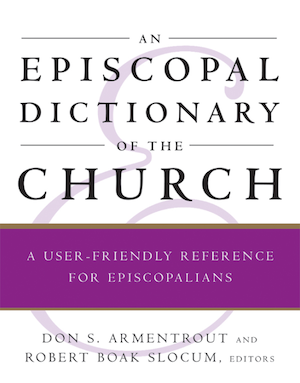
Glossary definitions provided courtesy of Church Publishing Incorporated, New York, NY,(All Rights reserved) from “An Episcopal Dictionary of the Church, A User Friendly Reference for Episcopalians,” Don S. Armentrout and Robert Boak Slocum, editors.